

Glucosamine and chondroitin have become two of the most widely used joint support nutrients worldwide. Yet despite their popularity, there is still confusion around what they actually do and whether they truly deserve their long-standing reputation. At Good Health, we believe they still stand strong amongst our joint health range of supplements.

What are Glucosamine and Chondroitin?
Glucosamine is a naturally occurring compound found within cartilage and connective tissue. It plays a vital role in supporting the structure, elasticity, and hydration of cartilage. Healthy cartilage requires support from hydration to remain resilient and capable of absorbing impact. Without adequate hydration and structural support, cartilage can become less flexible and more vulnerable to wear and tear.
Chondroitin is another major structural component of cartilage and connective tissue. Like glucosamine, it supports elasticity but also cushioning. Chondroitin is particularly valued for its ability to support the integrity of cartilage tissue.
Why Are Glucosamine and Chondroitin Often Taken Together?
Together, glucosamine and chondroitin form a complementary, “building block” partnership that supports both the structure and function of joints. Research suggests they also support a gentle antioxidant profile in joints.
This combination is especially popular among:
- Ageing adults
- Athletes and active individuals
- People with physically demanding jobs
- Those recovering from joint strain or injury
- Individuals experiencing stiffness or reduced mobility
Importantly, glucosamine and chondroitin’s benefits are not instant. Their role is supportive and structural in nature. This is one reason some people mistakenly assume they “don’t work” — they are designed to support long-term.
Glucosamine and chondroitin supplementation is commonly used to support:
- Joint comfort and mobility
- Cartilage maintenance
- Recovery from physical strain
- Healthy ageing joints
- Sports-related wear and tear
- General connective tissue health
Why Vitamin D3 Matters for Joint Health Support
Vitamin D3 is often associated with supporting immune and bone health, but its role in musculoskeletal and joint wellbeing may extend much further.
Adequate vitamin D status appears to be important for supporting healthy joint function and inflammatory balance. Research has also shown that low vitamin D levels are relatively common in individuals experiencing joint concerns. Vitamin D3 supports calcium absorption and bone integrity, which is particularly important because joints rely on healthy adjacent bone structures for support and nourishment.
Emerging research also suggests vitamin D may influence inflammatory pathways involved in joint discomfort and mobility issues. For this reason, vitamin D3 is increasingly included in modern joint support formulations as a valuable co-factor for overall musculoskeletal support.
We get vitamin D from exposure to UVB in the warmer months; however, during winter, this process does not happen due to the angle of the sunlight. Either eating D3 rich foods or supplementing D3 is necessary to support your vitamin D levels at this time.
The Importance of Manganese for Joint Support
Manganese is a trace mineral that rarely receives the attention it deserves, yet it plays several important roles in supporting connective tissue and joint health.
Manganese supports the formation of collagen and proteoglycans c critical structural components of cartilage, tendons, ligaments, and bone tissue. It also supports the activity of manganese superoxide dismutase (MnSOD), an important antioxidant enzyme that supports the protection of tissues from oxidative stress. Because oxidative stress is increasingly recognised as a contributor to joint degeneration and inflammatory processes, nutrients involved in antioxidant defence may provide valuable support for long-term joint health.
Manganese also supports healthy bone mineralisation, making it particularly relevant in ageing populations or individuals with increased physical demands.
A Holistic Approach to Joint Health
Long-term joint health is influenced by multiple lifestyle factors, including:
- Maintaining a healthy body weight
- Regular movement and strength training
- Whole food nutrition
- Recovery, sunlight, and sleep
- Managing repetitive strain
- Supporting muscle strength and stability
- Supporting healthy immune responses
Movement itself is particularly important. Healthy joints rely on movement to circulate synovial fluid and nourish cartilage tissue. While excessive strain can contribute to joint stress, complete inactivity may also worsen stiffness and mobility issues.
For many people, the best outcomes come from combining targeted nutritional support with sustainable lifestyle habits.
An updated classic
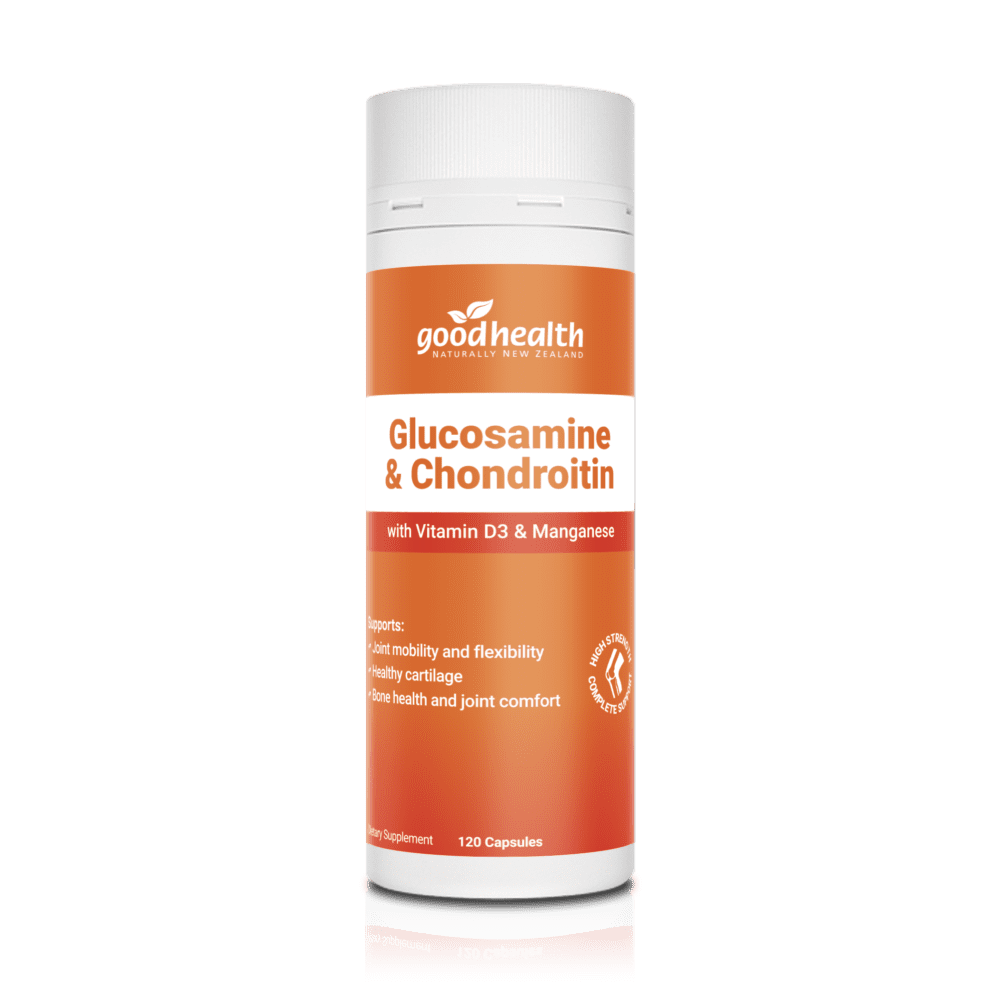
Less is more with Good Health Glucosamine and Chondroitin — a high strength glucosamine formulation designed to support healthy cartilage, plus joint comfort and mobility. It contains the scientifically researched dose of glucosamine, 1500mg, along with chondroitin, two important building blocks for supporting healthy cartilage maintenance. Additional co-factors, vitamin D3 and manganese, are included for healthy joint cartilage and fluid, and bone care support.
Support For
Joint restoration
Sportspeople
Strains and sprains
Cartilage, tendon, or ligament
Spinal disc health
Connective tissue
Athletes’ joint maintenance
Bone health
Glucosamine and Chondroitin—still relevant
Despite decades of discussion, glucosamine and chondroitin remain two of the most widely used nutrients for joint health for good reason. They provide important structural building block support for cartilage health, connective tissue maintenance, and joint hydration and function. For many people — particularly ageing adults, athletes, and those experiencing the effects of physical wear and tear — they may offer valuable support as part of a broader joint health strategy.
Always read the label and use as directed. If symptoms persist see your healthcare professional. Good Health Auckland.


 English
  Chinese
  Vietnamese