

Vitamin K2 might not be the most talked-about nutrient, but it plays a surprisingly big role in your health. Here’s a short, practical guide to what makes it so important.
1. It’s Not the Same as Vitamin K1
Vitamin K isn’t just one thing; it’s a collection of structurally similar quinones that includes two main types: vitamin K1 (phylloquinone), primarily found in green leafy vegetables, and vitamin K2 (menaquinones), which are synthesised by bacteria and found in animal products. K1 really only supports blood clotting, while K2 does that and has other, varied roles—especially in supporting bones, blood vessels, heart and brain health, and beyond.
2. It’s a Fat-Soluble Vitamin
K2 belongs to the fat-soluble family of vitamins (along with vitamins A, D, and E). That means it’s absorbed with fat and stored in the body, rather than flushed out quickly like water-soluble vitamins (C and the Bs).
3. It Supports Calcium in the Body
Think of K2 as a “traffic controller” for calcium support. It supports the directing of calcium into bones and teeth—where you want it—and away from depositing in soft tissues like arteries, kidneys, and the brain.
4. It Supports Strong Bones
By supporting bone-building proteins, K2 supports bone structure and may support joint comfort over time.
5. It Supports Blood Vessels
K2 also supports proteins that help keep calcium out of artery walls, supporting flexible, healthy blood vessels and a happy and healthy heart.
6. It Does More Than Support Bone and Heart Health
Emerging research shows K2 may also support:
- Energy production (like CoQ10 and PQQ, two other quinones essential to support mitochondrial function)
- Chức năng miễn dịch
- Brain and nerve health
- Hormone production
- Gene and cellular health

7. There Are Different Forms of K2
The most important ones are:
- MK-4 (found in animal foods, active in the body)
- MK-7 (found in fermented foods, longer-lasting in the bloodstream and can be converted into MK-4)
Both play valuable roles.
8. Kids May Need Even More
Because children are growing rapidly, K2 is especially important for supporting the development of strong bones, teeth, posture, and overall facial and skeletal structure.
The adequate daily intake of vitamin K2 for children varies by age:
- Infants (0-6 months): 2.0 mcg
- Infants (7-12 months): 2.5 mcg
- Children (1-3 years): 30 mcg
- Children (4-8 years): 55 mcg
- Children (9-13 years): 60 mcg
- Adolescents (14-18 years): 75 mcg for boys and 60 mcg for girls
These recommendations are based on guidelines from the National Institutes of Health (NIH)
9. You Can Get It from Food (and Maybe Your Gut)
Top sources include:
- Fermented foods (like natto, yoghurt, kefir)
- Cheese and dairy fats like butter and ghee
- Egg yolks
- Dark poultry meat and liver (liver with some fat, like butter, is the best way to absorb K2 from the organ meats)
Your gut bacteria can also produce some K2, though how much you absorb is still being studied.

10. There’s Still a Lot to Learn
There’s no official daily recommendation yet. Estimates vary, but many experts suggest intakes higher than current minimum guidelines. Research is ongoing, especially for supporting long-term health and children.
The Bottom Line
Vitamin K2 is a quiet but powerful nutrient. From supporting calcium to supporting bones, heart health, and more, it plays a key role across your whole body. A varied diet with animal and fermented foods is one of the best ways to make sure you’re getting enough, but if you’re worried, supplementation is something you can try.
If you’d like to take a deeper dive, see Vitamin K2: the quiet nutrient that supports your bones and heart.
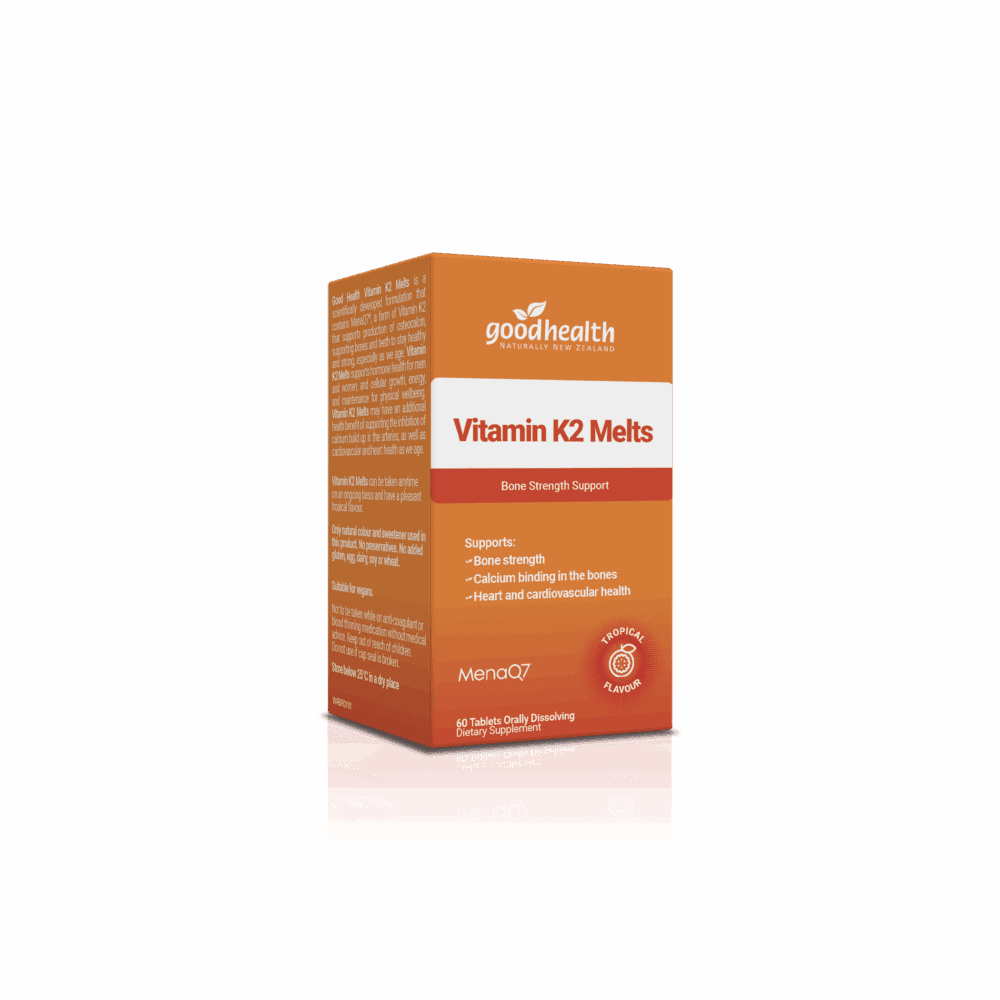
Good Health Vitamin K2 Melts
Good Health Vitamin K2 Melts is a scientifically developed formulation that contains MenaQ7, a form of Vitamin K2 that supports production of osteocalcin, supporting bones and teeth to stay healthy and strong, especially as we age. Vitamin K2 Melts also supports blood sugar balance, reproductive hormone health, cellular growth, energy, and maintenance, and the inhibition of calcium build up in the arteries, as well as cardiovascular and heart health as we age. Vitamin K2 Melts have a pleasant-tasting, tropical flavour, and you can take them anytime, every day.
TAPS PP5358


 Vietnamese
  English
  Chinese